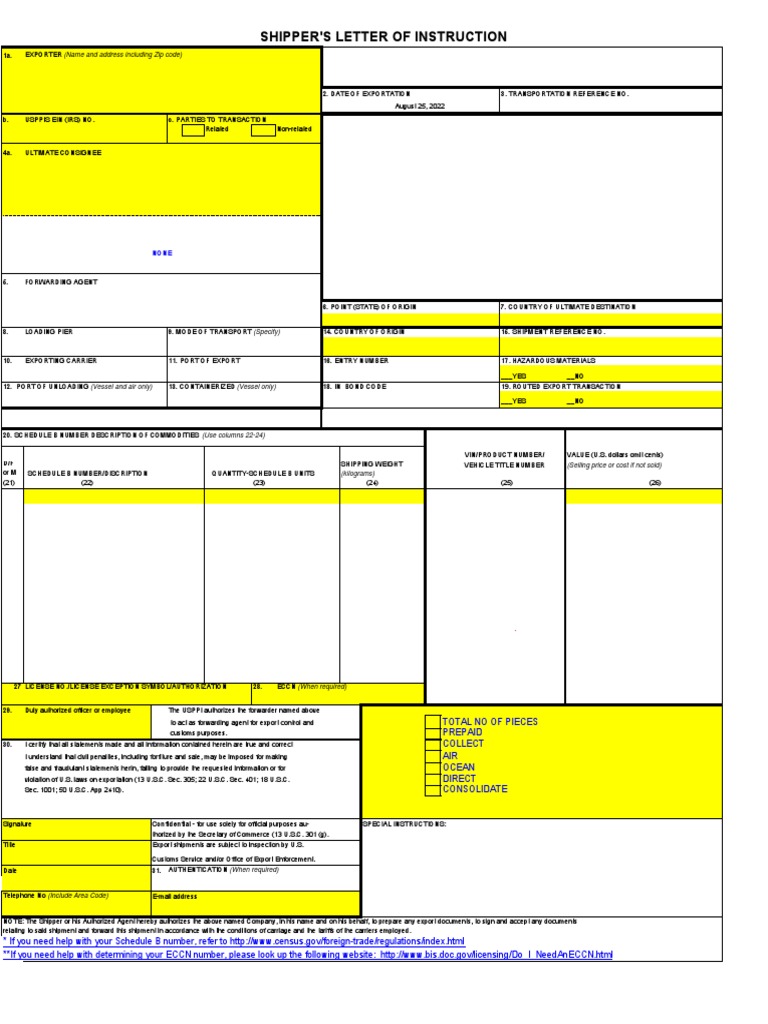
Shipper's Letter Of Instruction Template Excel
Shipper's Letter Of Instruction Template Excel - Terms like consignee, shipper, and carrier each refer to specific roles — and knowing their differences can help you avoid delivery issues, legal problems, and unhappy. It is the person who contracts the logistics services to. The shipper is also known as the seller in a product transaction and is responsible for ensuring that the items that are purchased are delivered to the buyer or consignee. Let shipscience guide you through the intricacies of navigating these roles effectively. A shipper is responsible for packaging, preparing the freight documents, and in. Confused about the difference between a carrier and shipper in logistics? The shipper, also known as sender or shipper, is the person or entity that initiates the process of transportation of goods. Generally, the shipper bears the. The shipper is the individual or business entity with the goods that need to be transported. A company that manufactures a product and ships it could be a. Let shipscience guide you through the intricacies of navigating these roles effectively. Shippers are responsible for preparing shipments for carriers to. Someone who provides or sends goods for shipment, by packaging, labeling, and arranging for transit, or who coordinates the transport of goods In logistics, a shipper is any individual or company that sends goods from one place to another. The shipper is the individual or business entity with the goods that need to be transported. The shipper is the individual, company, or organization that prepares and sends goods via a carrier. Confused about the difference between a carrier and shipper in logistics? A shipper (also known as a consignor) is a person or a company responsible for organising and transporting goods from one point to another. Generally, the shipper bears the. It is the person who contracts the logistics services to. It is the person who contracts the logistics services to. A shipper is the person or company who owns or oversees goods or products for transport from one location to another. This term is broadly used to describe the party responsible for initiating the shipment of. Confused about the difference between a carrier and shipper in logistics? Let shipscience guide. A shipper is the person or company who owns or oversees goods or products for transport from one location to another. Confused about the difference between a carrier and shipper in logistics? The shipper is also known as the seller in a product transaction and is responsible for ensuring that the items that are purchased are delivered to the buyer. The shipper is the individual or business entity with the goods that need to be transported. In logistics, a shipper is any individual or company that sends goods from one place to another. Confused about the difference between a carrier and shipper in logistics? A company that manufactures a product and ships it could be a. A shipper (also known. A company that manufactures a product and ships it could be a. It is the person who contracts the logistics services to. The shipper is the individual or business entity with the goods that need to be transported. A shipper is responsible for packaging, preparing the freight documents, and in. Terms like consignee, shipper, and carrier each refer to specific. It is the person who contracts the logistics services to. This term is broadly used to describe the party responsible for initiating the shipment of. Someone who provides or sends goods for shipment, by packaging, labeling, and arranging for transit, or who coordinates the transport of goods Confused about the difference between a carrier and shipper in logistics? Shippers are. The shipper, also known as sender or shipper, is the person or entity that initiates the process of transportation of goods. Let shipscience guide you through the intricacies of navigating these roles effectively. The shipper is the individual, company, or organization that prepares and sends goods via a carrier. It is the person who contracts the logistics services to. Someone. The shipper is also known as the seller in a product transaction and is responsible for ensuring that the items that are purchased are delivered to the buyer or consignee. The shipper is the individual or business entity with the goods that need to be transported. A shipper is responsible for packaging, preparing the freight documents, and in. This term. Confused about the difference between a carrier and shipper in logistics? It is the person who contracts the logistics services to. The shipper is the individual or business entity with the goods that need to be transported. Let shipscience guide you through the intricacies of navigating these roles effectively. Someone who provides or sends goods for shipment, by packaging, labeling,. Confused about the difference between a carrier and shipper in logistics? Terms like consignee, shipper, and carrier each refer to specific roles — and knowing their differences can help you avoid delivery issues, legal problems, and unhappy. Shippers are responsible for preparing shipments for carriers to. The shipper is the individual, company, or organization that prepares and sends goods via. Generally, the shipper bears the. In logistics, a shipper is any individual or company that sends goods from one place to another. A company that manufactures a product and ships it could be a. A shipper is responsible for packaging, preparing the freight documents, and in. The shipper, also known as sender or shipper, is the person or entity that. The shipper is the individual, company, or organization that prepares and sends goods via a carrier. Shippers are responsible for preparing shipments for carriers to. Generally, the shipper bears the. A shipper (also known as a consignor) is a person or a company responsible for organising and transporting goods from one point to another. Let shipscience guide you through the intricacies of navigating these roles effectively. A shipper is the person or company who owns or oversees goods or products for transport from one location to another. Someone who provides or sends goods for shipment, by packaging, labeling, and arranging for transit, or who coordinates the transport of goods A company that manufactures a product and ships it could be a. Terms like consignee, shipper, and carrier each refer to specific roles — and knowing their differences can help you avoid delivery issues, legal problems, and unhappy. The shipper is the individual or business entity with the goods that need to be transported. The shipper, also known as sender or shipper, is the person or entity that initiates the process of transportation of goods. The shipper is also known as the seller in a product transaction and is responsible for ensuring that the items that are purchased are delivered to the buyer or consignee. A shipper is responsible for packaging, preparing the freight documents, and in.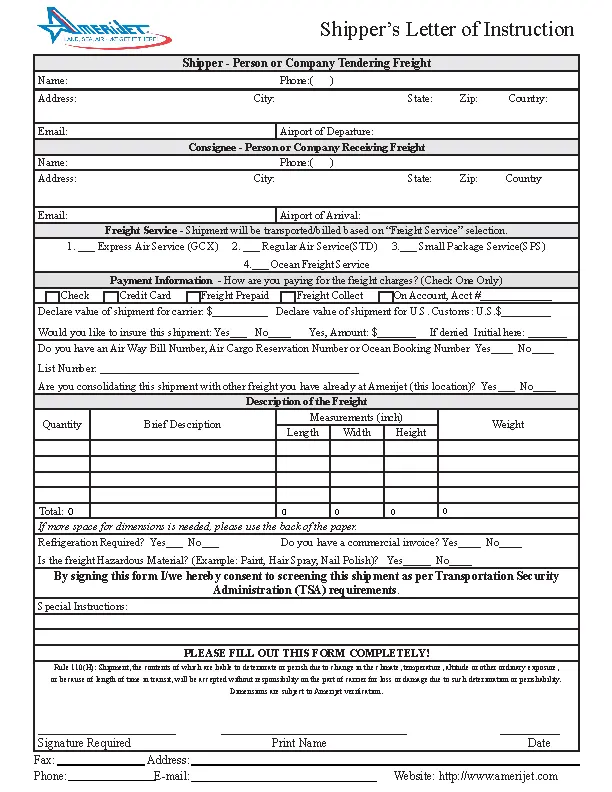
Shippers Letter Of Instruction Template PDFSimpli
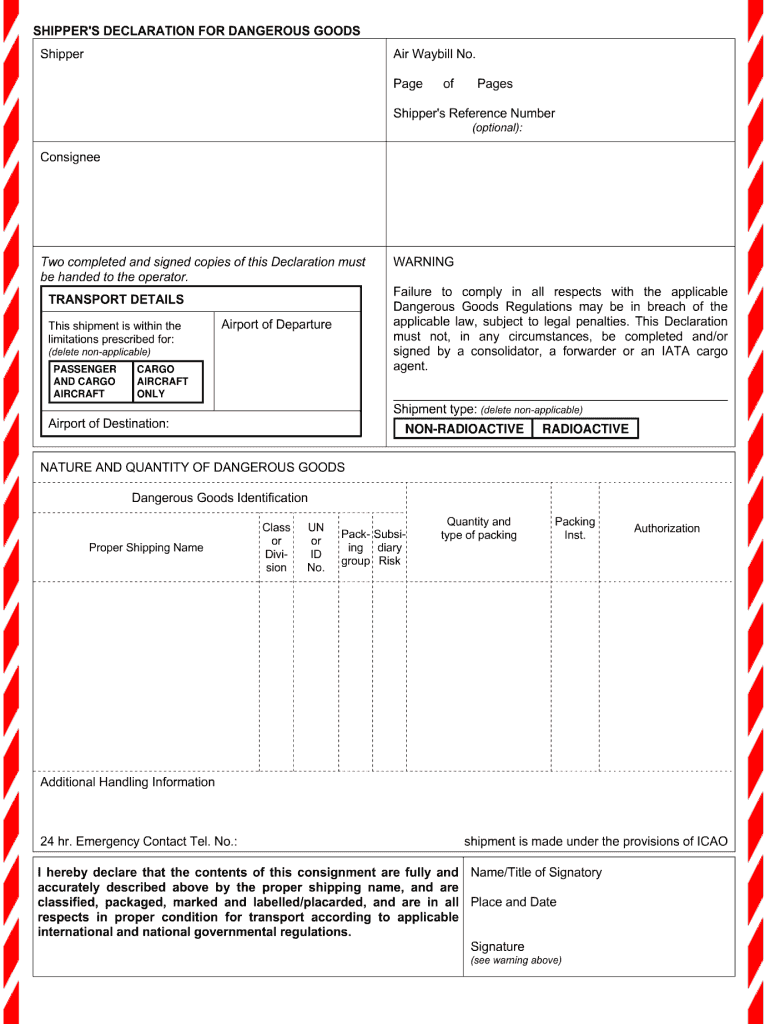
Shipper's Letter Of Instruction Template

Fillable Online Shipper's Letter Of Instruction Template Fax Email
Shipper’s Letter of Instruction
Shipper's Letter of Instruction PDF
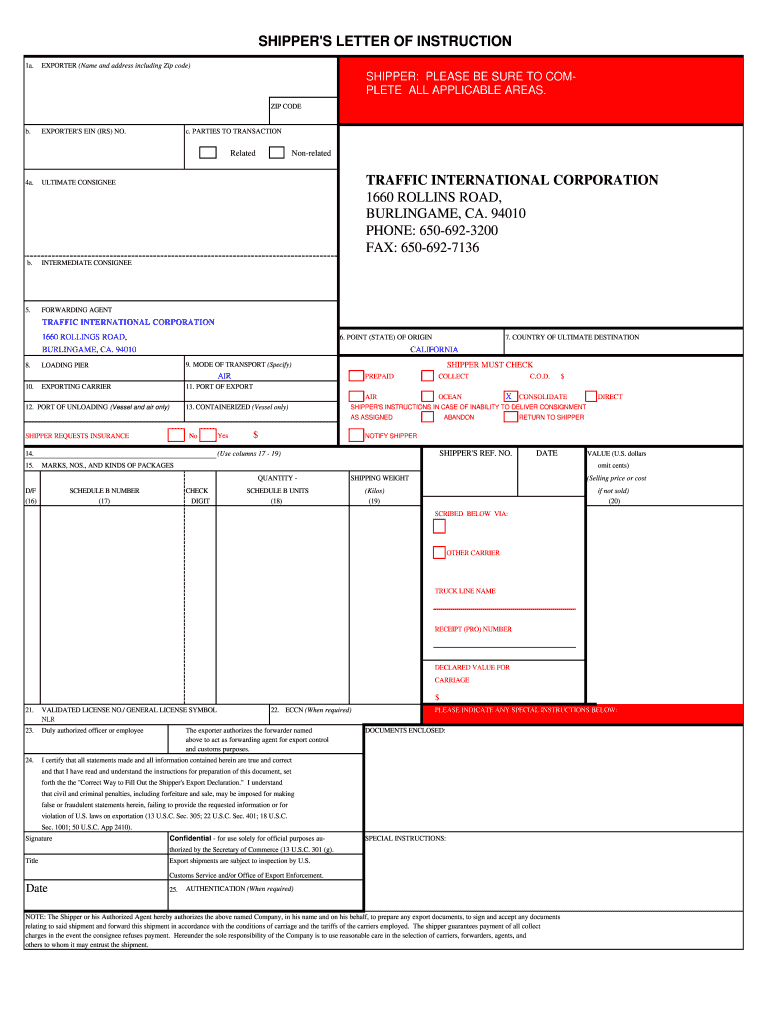
Shipper S Letter Of Instruction Template Fill Out Sig vrogue.co

Shipper's Letter Of Instruction Template
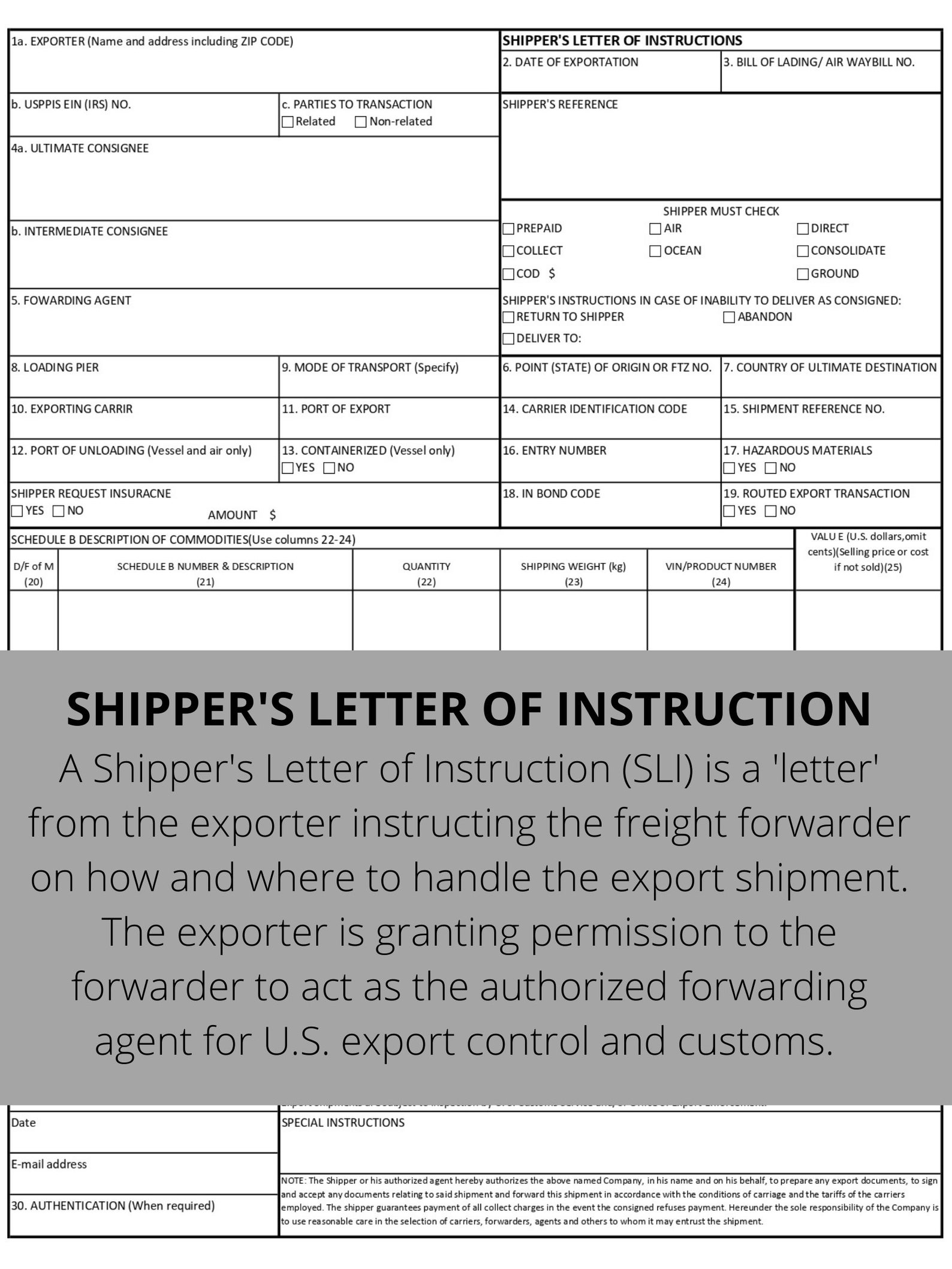
Sample Shipper S Letter Of Instruction Template Print vrogue.co
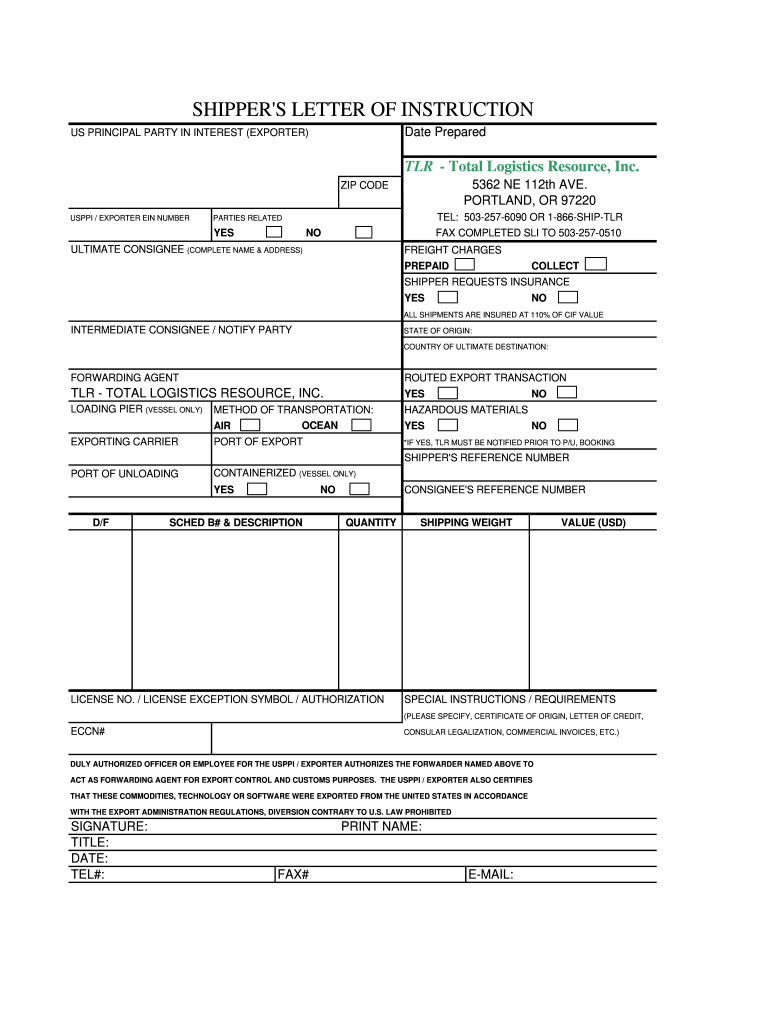
Shipper's Letter Of Instructions Template
Shipper's Letter of Instruction Format PDF Freight Transport
It Is The Person Who Contracts The Logistics Services To.
Confused About The Difference Between A Carrier And Shipper In Logistics?
This Term Is Broadly Used To Describe The Party Responsible For Initiating The Shipment Of.
In Logistics, A Shipper Is Any Individual Or Company That Sends Goods From One Place To Another.
Related Post: